From diagnosis to
visible change in results
What is truly worth changing in everyday work so that investment in employee development translates into business results?
A comprehensive consulting project for the dealer network of a premium brand. It involved more than 100 consulting days, close cooperation with senior management – the Managing Director, Aftersales Director, and Service Manager – and work across 37 dealers.
Premium brand dealer network | Automotive


STARTING POINT
Employees across the network had already completed training cycles tailored to their roles and the brand’s standards. Knowledge and competencies were already being developed systematically.
The remaining challenge was to translate them into everyday practice and the expected business results.
The project therefore did not begin with another training course, but with a diagnosis: what is actually happening in the processes, where do barriers arise, and what can bring real change?
Project scale
The right questions first
Based on the global methodology, I developed a structured diagnostic tool adapted to the specifics of the local market.
I consulted the scope of the diagnosis with Aftersales Area Managers, combining global standards with their knowledge of the dealer network and the specifics of the local market.

A shared business language
Before beginning the diagnostic process, we prepared a “KPI Guide” – a practical tool containing definitions of key indicators, calculation methods, and best practices from other markets.
Bringing definitions, benchmarks, and brand targets together in one place made KPIs easier to use in everyday work and supported consistent interpretation of results.
Processes meet data
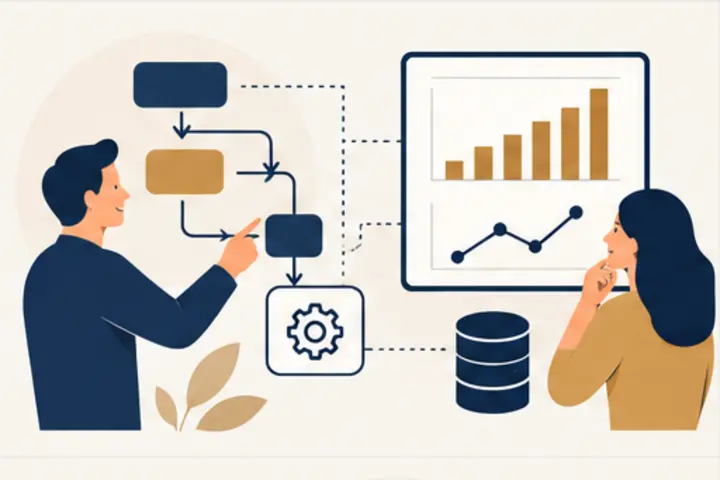
At each dealership, I conducted a detailed analysis of processes and key KPIs.
This allowed us to connect the perspective of “How do we work?” with “What do our results tell us?” and identify both areas requiring improvement and those with the greatest potential.

Not a report. An action plan.
Together with the management team, I used the diagnostic results to define actions tailored to each dealership’s situation and priorities.
We then translated these into concrete implementation tasks, defining responsibilities, deadlines, and measures of success for each one.
Implemented does not mean effective.
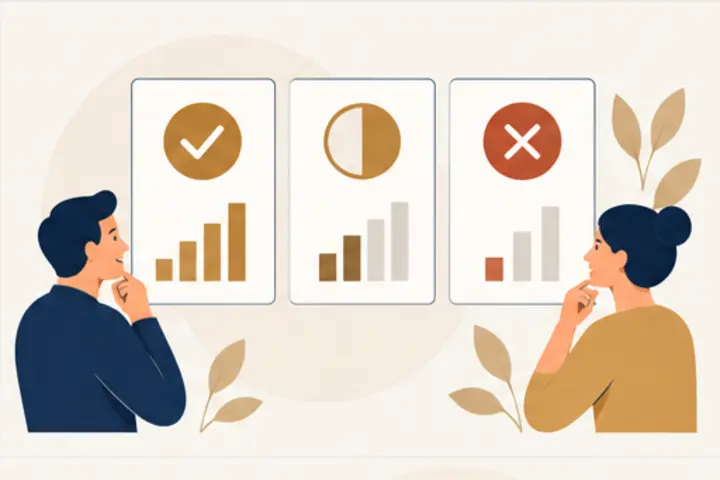
The project did not end when the actions were implemented. I returned to the dealerships to check not only whether the tasks had been completed, but above all whether they had produced the intended effect.
result achieved
partly achieved
not achieved
580 out of 695 implementation tasks were completed – more than 83%.
88% of the evaluated actions achieved the expected result fully or partially.
The evaluation also identified 117 new tasks – turning evaluation into the starting point for further improvement.
From action to business result
For each action, we defined a starting point, a KPI, and a target value. During evaluation, I analyzed the actual result and, where possible, translated the achieved change into concrete business value – additional revenue and/or Contribution Margin.
This allowed us to assess not only whether the planned actions had been implemented, but above all what business impact they had actually produced.
Target significantly exceeded
sold
New revenue stream
Partial success – real impact

The point was not to call every result a success.

37 dealers. One network. Shared insight.
A shared methodology made it possible to use the findings not only at dealership level, but across the entire network.
Each dealership’s diagnosis – together with its action plan, implementation, and results – became a source of insight for the whole network: revealing patterns, recurring barriers, areas of potential, and opportunities for improvement.

The project ends. The change does not.
After completing my direct work with the dealerships, I handed over the diagnostic findings, implemented actions, and areas requiring further attention to the Area Managers, enabling the work to continue within the organization’s existing structures.
The aim was not to create a solution dependent on the consultant’s presence.
The aim was to make the change sustainable.
We began by asking what we could improve,
and ended with knowing what actually works, what effect it produces, and what is worth doing next.
DIAGNOSIS → PRIORITIES → KPI → IMPLEMENTATION → EVALUATION → BUSINESS IMPACT