From perspective
to practice
Workshop design | Behavior change | Cross-departmental cooperation | Automotive
How can a workshop be designed to develop knowledge and skills while also working on perspective, attitude, and action?
The project focused on cross-departmental cooperation within a dealership. Participants represented different areas of the organization, each with its own tasks, processes, and goals.
They had already developed sales and communication competencies. The next step was therefore not to provide more knowledge or introduce another set of techniques.
The challenge was to create the conditions for changing how participants understood their own role in the organization and to translate that change into concrete action.
An organization is not a collection of independent departments. From the customer’s perspective, it is one interconnected system in which the actions of one area affect the work of others, the customer experience, and the company’s overall results.
Instead of a conventional communication or teamwork training, the solution was therefore a workshop grounded in the organization’s real processes and designed to work simultaneously on two dimensions.
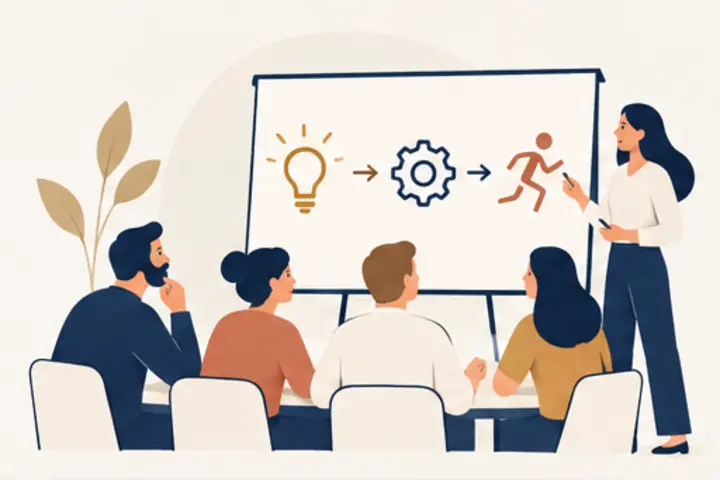
Two paths. One goal.
A change in perspective opened new possibilities for action. Working on attitude helped participants turn those possibilities into action.
EXPERIENCE
CONNECTIONS
SOLUTIONS
TO ACTION
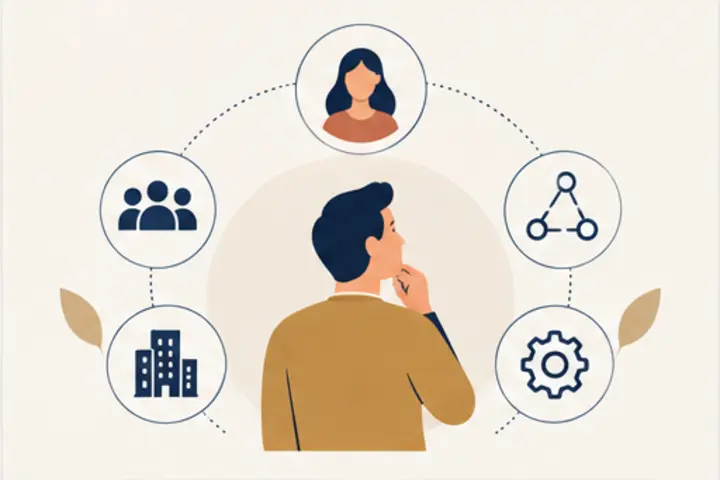
Looking beyond one’s own department
The starting point was the dealership’s real processes – but viewed from a perspective broader than the participants’ own responsibilities.
Participants analyzed these processes from the perspectives of the customer, their own department, and other areas, uncovering connections that are not always visible in everyday work. It was particularly important to examine processes in which they were not directly involved and recognize how the actions of others affected their work – and how their own decisions created opportunities or constraints for others.
The boundary of your department is not the boundary of your influence. The perspective gradually broadened: from “What am I responsible for?” to “Who and what do I influence?” and finally to “How do we jointly shape the customer experience and the outcome of the entire process?”
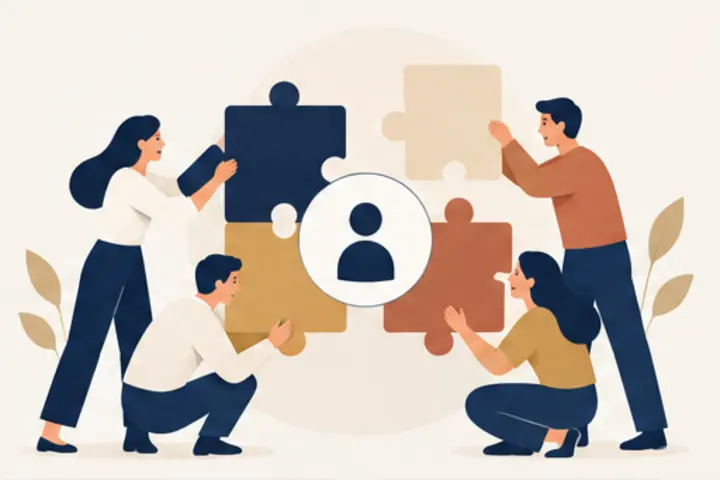
From departmental goals to shared outcomes
Broadening the perspective made it possible to move from seeing the connections to identifying real opportunities for collaboration between departments.
Participants analyzed points of contact, connections between departments, and their respective goals and KPIs. The aim was not to abandon their own goals in favor of others, but to identify where the actions of one department could also support the goals of another.
To the specific: “What can we achieve together that none of our departments can achieve alone?”
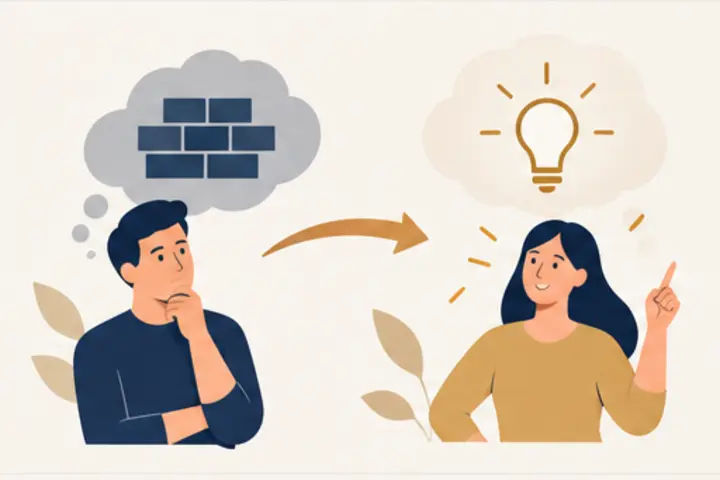
From “we can’t” to “what can we do?”
Seeing possibilities is one thing. Being willing to find a way to use them is another.
Seeing possibilities is one thing. Being willing to find a way to use them is another.
That is why part of the workshop deliberately focused on developing a “can-do” attitude. Participants moved beyond the obvious solutions and constraints and looked for ways to turn ideas into actions that could work within the reality of the organization.
I LOOK FOR POSSIBILITIES → I CHECK THE CONSTRAINTS → I LOOK FOR A WAY
It is a small shift in the thinking process, but it can make a major difference in how people approach change.
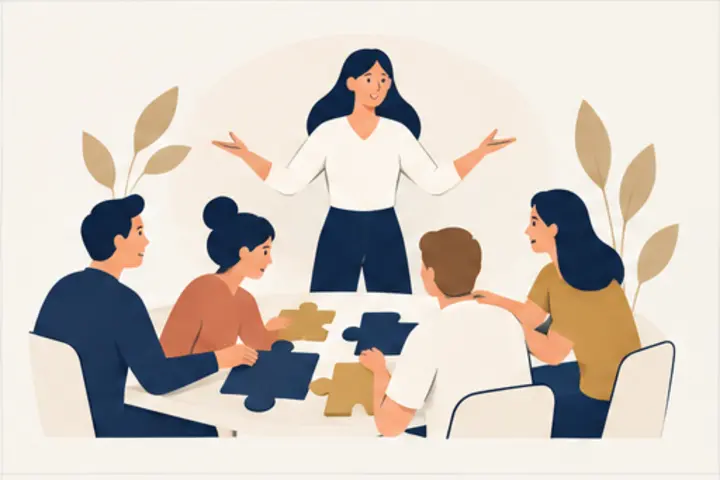
The solutions did not come from me
Participants were not given ready-made principles of cooperation or solutions to implement. They created them themselves throughout the workshop process.
My role was to design experiences that led them from changing perspective, through recognizing dependencies and opportunities for cooperation, to creating concrete solutions for their own organization.
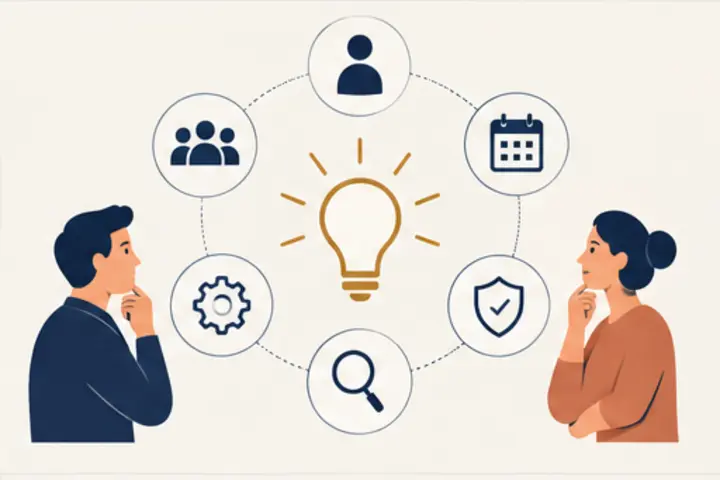
An idea must stand up to reality
The ideas were first turned into concrete plans: WHAT? WHO? FOR WHOM? WHEN? HOW?
They then underwent a stress test. Participants looked for gaps in responsibility, conflicting KPIs, problems in information flow, and risks at the interfaces between departments.
Representatives of other areas challenged assumptions and identified further constraints. The authors then defended the idea, modified it, or looked for ways to mitigate the identified risks.
Only then was a joint decision made: implement → modify → abandon.
Making the decision together improved not only the quality of the solution, but also participants’ commitment to putting it into practice.
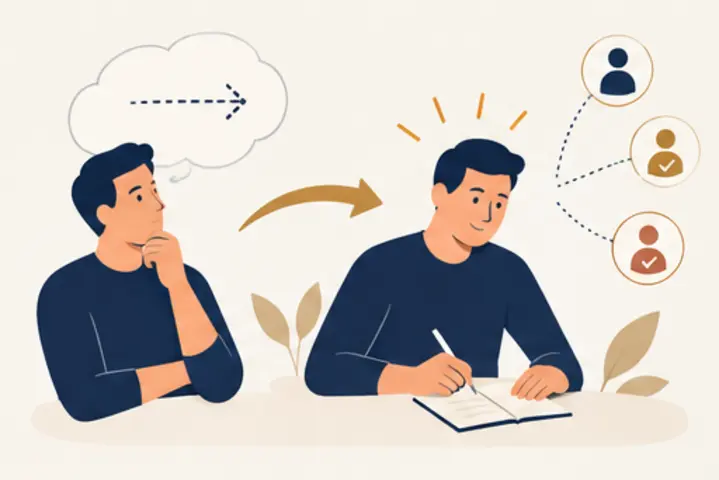
From “what should we do?” to “what will I do?”
The change in perspective was built throughout the workshop. Each successive experience invited participants to look at the organization through the eyes of the customer, other departments, and the entire process – and to reflect on their own influence on how it works.
Participants reached their own conclusions about what needed to change and turned those conclusions into individual commitments and concrete first steps.
WHAT SHOULD WORK DIFFERENTLY? → WHAT DO WE NEED FROM OTHERS? → WHAT INFLUENCE DO I HAVE? → WHAT DO I WANT TO CHANGE IN MY OWN APPROACH? → WHAT CAN I START DOING DIFFERENTLY?
The result was a map of mutual commitments – specific people committing to specific actions for colleagues in other areas of the organization.
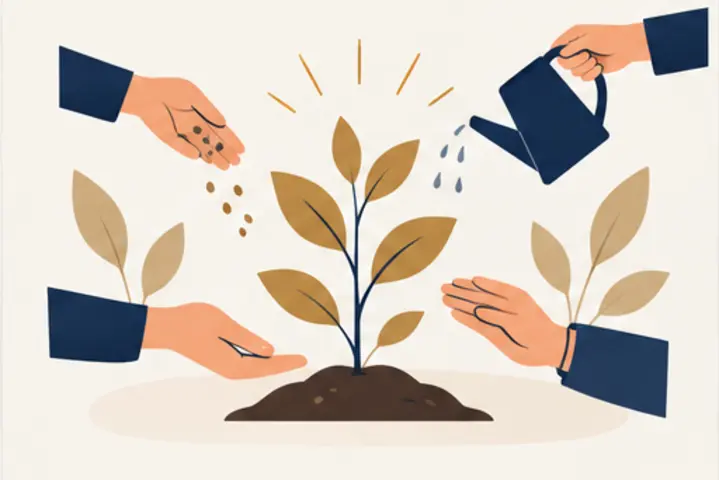
The workshop ends. The change does not.
A few workshop days can change perspective, trigger reflection, and lead to new ways of acting. They cannot, however, guarantee lasting organizational change.
That is why the project did not end with the workshop. The solutions developed required further implementation, clear ownership, and support from managers – while preserving the engagement of the employees who had created them.
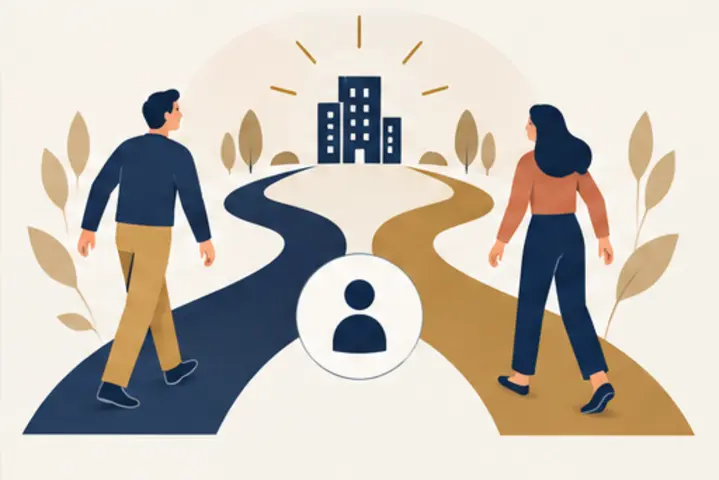
Two paths.
One goal.
The goal was to develop not only what participants know and can do, but also how they view their role, make decisions, and act in everyday reality.
The visible goal was better cross-departmental cooperation. To achieve it, two paths were developed in parallel: perspective and attitude – both leading to shared action.