CASE STUDY 4
From individual actions
to a coherent system
Development strategy | Training management system | Consulting | Organizational development
The starting point was not a lack of training. On the contrary, the organization was already running numerous initiatives related to employee and customer development, knowledge sharing, and training delivery.
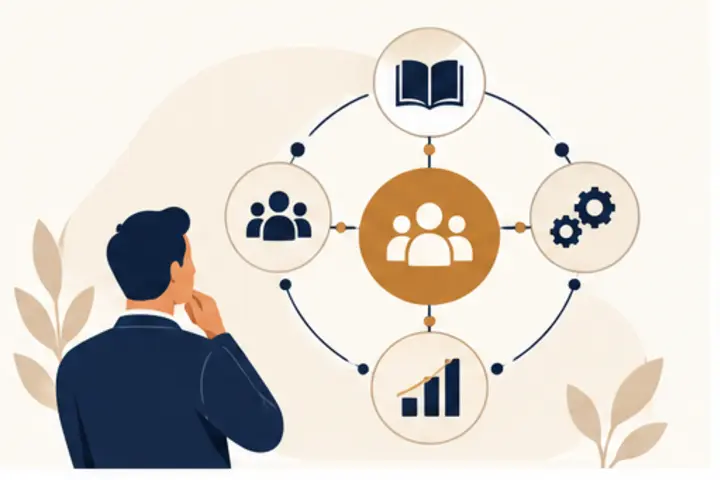
How can multiple development initiatives be brought together into a coherent system that supports organizational needs and business goals?
Starting point
The challenge was to view these initiatives as one system: connected to the business, based on shared principles, with clearly defined responsibilities and processes for planning development activities, managing knowledge, and evaluating results.
That is why the project did not begin with the creation of more solutions.
First, it was necessary to understand how the entire system worked in practice.
Three interconnected areas
Training management
needs, quality, and evaluation.
Knowledge management
storage, and sharing
of knowledge.
Training process
Diagnosis first. Solution second.
The comprehensive audit covered three interconnected areas: training management, knowledge management, and the training process.
The audit combined the perspectives of employees, trainers, and customers with an analysis of existing processes and solutions. It included interviews, surveys, workshops, and focus groups with trainers.
I analyzed, among other things, training planning, responsibilities, needs, evaluation, trainer competencies, knowledge management, IT tools, and the links between development activities and strategy, sales, marketing, and business goals.
The diagnosis showed that many of the necessary elements were already in place. However, they did not yet form a coherent, coordinated system.

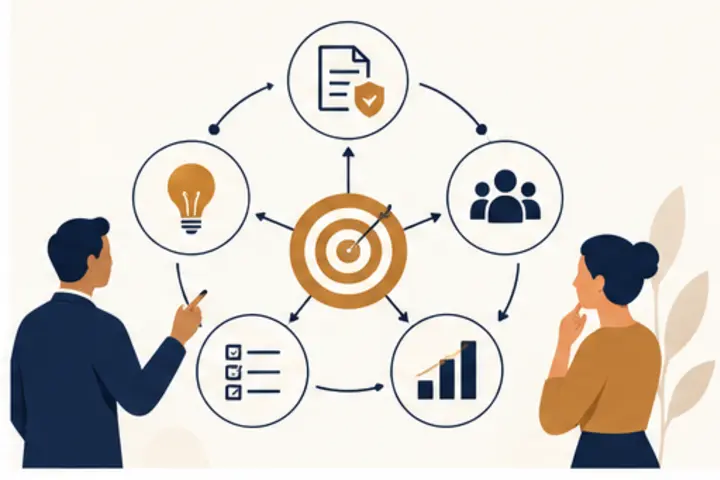
Don’t improve individual elements. Design the whole.
The audit results became the starting point for designing a target model for managing development activities.
Each element had to be designed to connect with and support the others.
I was not designing a collection of independent solutions. I was designing the relationships between them.
Elements of the target model
training plan
process
competency
model
management
requirements
From strategy to everyday action
The strategic framework was translated into concrete processes, standards, and tools used in everyday work.
These included evaluation tools, knowledge tests, questionnaires, post-training reports, tools for observing trainers’ work, communication standards, training documentation, and standard training scenarios for F2F and online delivery.
POLICY → PROCESS → STANDARD → TOOL → ACTION
A system works only when the people using it know exactly what they need to do differently.

Translating the model into tools
The model was translated into concrete tools that support everyday work and make implementation easier across the organization.
USE
Evaluation
Knowledge tests
Questionnaires
for managers
Post-training
reports
F2F and online
trainings scenarios

Consistency without taking away flexibility
A shared system did not mean one format for everyone. Solutions were developed for different target groups, together with standards for F2F ND online training.
The principles for design, delivery, and quality evaluation were shared. The defined standards ensure consistent quality while leaving trainers the flexibility to adapt their way of working to the group, the training goal, and the situation.
Standardize what ensures quality. Preserve flexibility where it is needed.
Standards
✓ training design
✓ training delivery and facilitation
✓ quality evaluation
✓ training documentation
✓ communication with participants
Flexibility
✓ different target groups
✓ different learning formats: F2F, online, blended
✓ CHOICE of working methods and techniques
✓ adaptation to the goal, group, and context
Beyond training: managing knowledge
The project also covered knowledge management: creating, updating, storing, and sharing knowledge.
Principles were developed for managing the knowledge base, creating new training programs, and updating existing materials.
Knowledge stops being a collection of materials. It becomes a resource that can be actively managed.
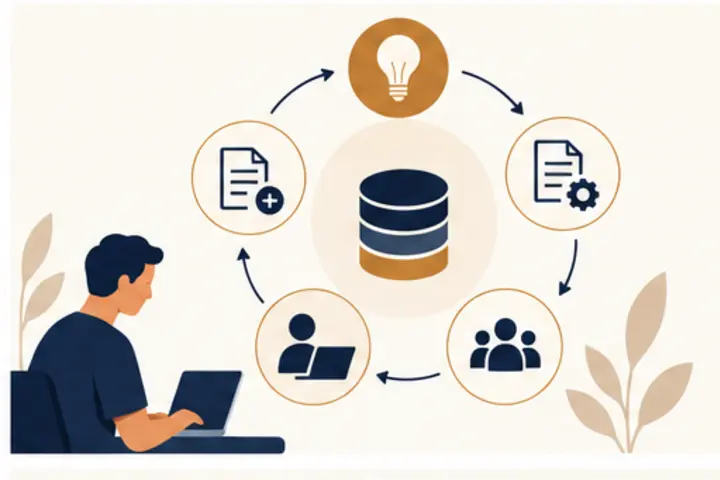
Knowledge management – key questions
They help structure activities and select the right solutions.
How do we know
what knowledge
we need?
Who is responsible
for keeping it
up to date?
When is
training needed?
How does knowledge
reach its
audience?
How do we know whether
it has been
used?

From “what training?” to “what is the need?”
A systematic training needs analysis process was designed for both employees and customers.
Data sources included needs reported by target groups, test results, recommendations from post-training reports, sales information, and, for employees, annual appraisal results.
Customer training was part of the sales strategy – supporting sales targets and the development of customer relationships.
Starting question
The right question
Decision
Is training needed? If so, for whom – and what solution is most appropriate?
Sources for the decision: market and customer needs • sales goals • competencies and development • customer relationships
Designing the path to implementation
I developed a plan for the next steps and a recommended sequence for implementing the individual elements of the system.
The approach had two parallel tracks: developing the overarching elements of the system while launching solutions that could already be applied in practice.
Implementing the project through small wins – gradually building experience and organizational commitment to the change.
We took the first implementation steps together to ensure the project was moving in the right direction. I could then confidently hand over the next steps, knowing the organization had everything it needed to continue.

Path to implementation
Priorities
Sequence
of actions
Small wins
Organizational
commitment
Further development
of the system
What was created?
The project began with a question about how development activities worked in practice and ended with a system architecture and a clear path for further implementation.
Diagnosis
Processes → Needs → Employee perspective → Trainer perspective → Customer perspective
Architecture
Strategy → Policy → responsibilities → processes
Solutions
Standards → Tools → Evaluation → Trainer competency model → Knowledge → LMS → Reporting
Implementation
Priorities → Sequence of actions → Small wins → Organizational commitment → Further system development

From many activities to one coherent development system.
A system in which development activities do not operate alongside the business, but are designed around its needs, goals, and organizational reality.